Most homeowners begin a remodeling or new-build conversation by thinking about layout, square footage, style, and budget.
Those things matter, but in some cases the bigger question is this: what kind of house do you actually want to own over time?
For some homeowners, standard construction is still the right fit. But for others, especially those building in exposed locations or thinking carefully about long-term maintenance, there is growing interest in materials and systems that offer a different kind of value. Not just curb appeal on day one, but durability, resilience, and fewer exterior headaches over the years.
At WORKS by JD, we pay attention to conversations like this because they reflect a broader shift in how some homeowners are thinking. In a recent Monday Power Hour discussion, the team explored SAM House, a modular panel-based building system designed around resilience, low maintenance, and envelope performance. The conversation highlighted something important: the best building decisions are not always about choosing the cheapest way to build. Sometimes they are about choosing the smartest long-term fit for the property, the location, and the homeowner’s priorities.
Durability Means More Than Strength Alone
When homeowners hear the word durable, they often think in simple terms. Stronger materials. Better protection. Less chance of damage.
But true durability is broader than that.
It includes how a home handles wind, moisture, salt exposure, surface wear, and ongoing maintenance demands. It includes whether the exterior needs frequent repainting, whether materials are vulnerable to repeated weathering, and whether the building envelope is designed to reduce the kinds of weak points that often show up over time.
That broader idea of durability came through clearly in the discussion around SAM House. The system was described as a modular wall-and-roof panel approach using molded synthetic concrete panels, with a focus on performance, low maintenance, and resilience in conditions such as wind exposure and weather-driven wear.
For homeowners, that kind of thinking matters. A house is not just something you build. It is something you live with, maintain, protect, and invest in for years.
Coastal and Exposed Properties Change the Conversation
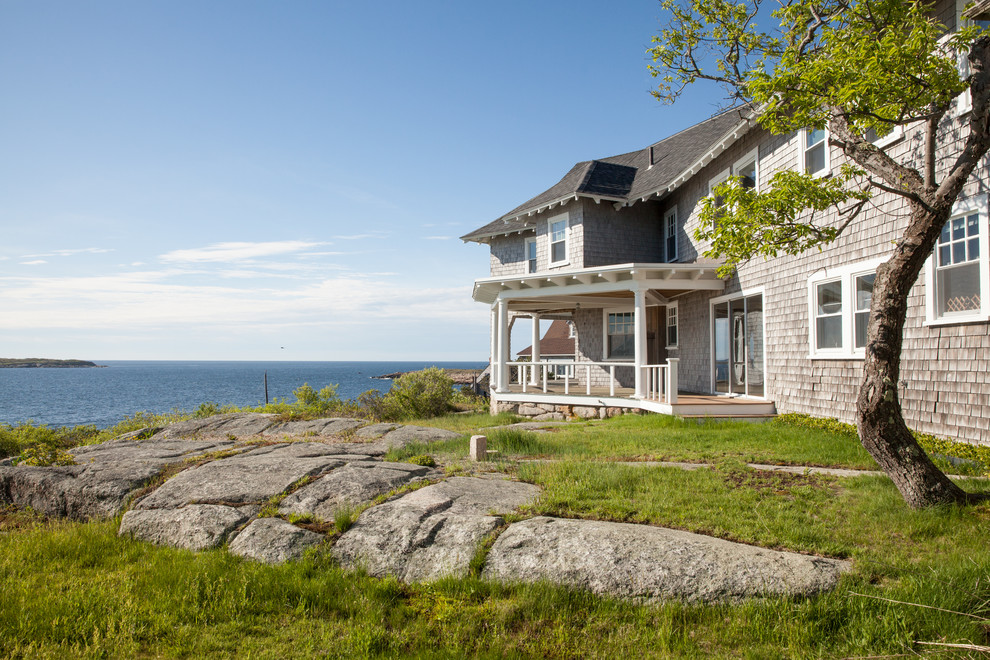
On the North Shore of Massachusetts, location has a huge impact on what makes sense.
A home close to the shoreline, exposed to salt air, wind, and heavy seasonal weather, may need to be evaluated differently than a home farther inland. Materials that seem acceptable in one setting may become more demanding, more vulnerable, or more expensive to maintain in another.
That is part of what made this conversation relevant for WORKS by JD. During the meeting, the discussion turned specifically toward shoreline applications, with attention on wind resistance, waterproofing, salt exposure, and the appeal of an exterior system that is largely maintenance-free aside from washing.
This is exactly the kind of thinking homeowners benefit from early in the process. Not every property needs the same solution. But the more exposed the home is, the more valuable it becomes to think beyond appearance alone and ask how the home will perform year after year.
ADUs Create a Different Set of Questions
Accessory dwelling units are another area where conversations like this become useful.
Many homeowners are surprised by how expensive an ADU can be once they understand what actually goes into building one well. Foundations, structure, systems, insulation, finishes, and code requirements do not disappear just because the footprint is smaller. In the meeting, that reality came up directly, along with the idea that some homeowners may be open to a different building approach if it helps simplify the shell and reduce long-term maintenance concerns.
That does not mean every ADU should be built with an alternative panel system. It does mean homeowners deserve honest guidance about their options.
Sometimes the right answer is traditional construction. Sometimes the better answer may be a more specialized system that solves a different problem, especially if the homeowner cares deeply about resilience, simplicity, and long-term ownership costs rather than only upfront comparison shopping.
Lower Maintenance Can Be a Real Form of Value
One of the more useful parts of the discussion was the distinction between cost and value.
The conversation acknowledged that a system like this may not always beat stick building on initial cost. In fact, Gary noted that if saving money at the build stage is the only goal, this may not be the answer. But he also emphasized the tradeoff: no siding to replace, no roofing to blow off, no painting cycle to keep up with, and a more durable shell over time.
That is an important homeowner conversation.
Not every good decision shows up as the lowest number at the beginning. Some decisions create value because they reduce future maintenance, protect against damage, and support a different ownership experience over the life of the home.
For the right homeowner, that can be a compelling case.
Good Design Still Has to Respect Aesthetics
Of course, performance is only part of the equation.
No matter how durable a system is, homeowners still care what their home looks like. They care whether it fits the character of the property, the neighborhood, and their personal style. They want a house that performs well, but they also want a house that feels right.
That question came up during the meeting too. The discussion touched on how molded panel systems can be adapted to different looks and textures, while also acknowledging that aesthetics still matter and that homeowner decisions are often driven by both logic and emotion.
This is where design-build guidance matters so much. A building system should never be evaluated in a vacuum. It needs to be considered alongside architectural intent, site context, homeowner priorities, and the finished appearance the client wants to achieve.
The Right Fit Matters More Than the Trend
At WORKS by JD, we are interested in thoughtful solutions, not novelty for its own sake.
A specialized building system is not automatically better just because it is different. It becomes valuable when it solves a real problem, fits the property, and supports the homeowner’s long-term goals. That may be especially relevant for shoreline homes, exposed sites, certain ADUs, or clients who place a premium on resilience and lower maintenance over time.
What matters most is having the right conversation early.
Homeowners deserve more than a one-size-fits-all answer. They deserve a team that can look at the property, understand the priorities, and evaluate whether traditional construction, an alternative system, or a hybrid approach makes the most sense.
That is part of what good planning does. It helps separate what is merely interesting from what is actually useful.
And when those conversations are handled well, the result is not just a better design decision. It is a better homeowner experience.