
Why a Kitchen Feels Different When Storage, Lighting, and Layout Are Planned Well
A kitchen can look updated and still feel difficult to use.
That is usually the real issue homeowners are responding to, even when they first talk about wanting new cabinets, new counters, or a cleaner style. The deeper problem is often not the finish. It is the function. When storage is limited, lighting is uneven, or the layout creates friction, the whole room feels harder than it should.
That is why the best kitchen remodeling decisions are rarely about one feature on its own. They come from planning how the room works as a whole.
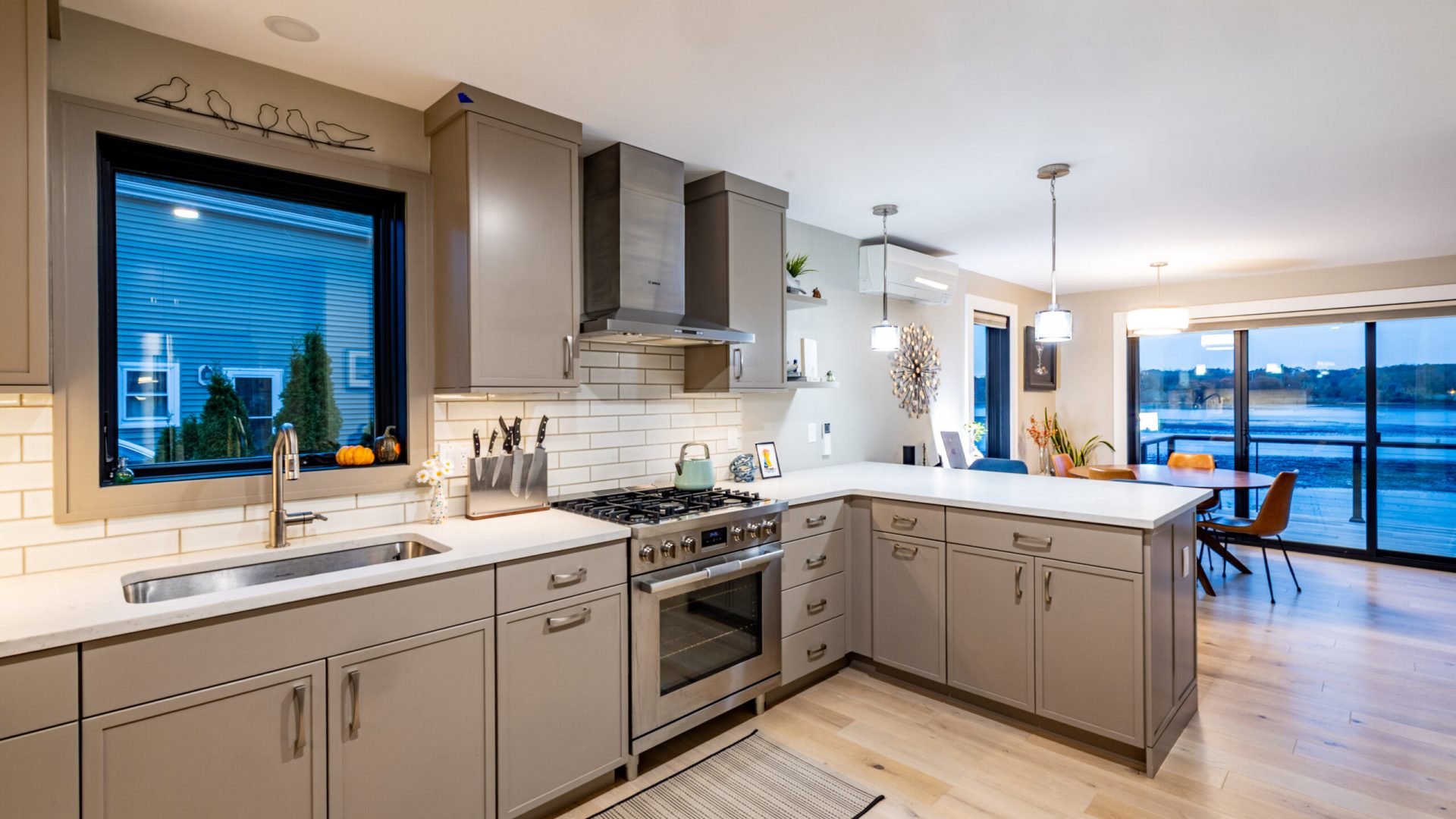
In a kitchen like the one shown here, that difference is easy to feel. The room has generous work surfaces, full cabinetry, defined task areas, under-cabinet lighting, and a large island that helps open the space rather than crowd it. None of those choices are loud. Together, they change how the kitchen supports everyday life.
Storage does more than hold things
Most homeowners do not really want “more cabinets.” They want less friction.
They want the coffee area to stop overflowing. They want the cooking zone to feel organized. They want the counters to stay usable instead of becoming a holding place for everything that has no proper home.
That is where thoughtful storage matters. Good kitchen storage is not about quantity alone. It is about placement.
Drawers near prep areas, cabinetry that uses vertical space well, and storage that supports the way a family actually cooks and lives can make a kitchen feel calmer almost immediately. When the essentials are where they should be, the room works with you instead of against you.
And that changes more than appearance. It changes how the day starts, how meals come together, and how the room feels when people gather in it.
Lighting changes both the mood and the usefulness of the room
Lighting is one of the easiest things to underestimate in a kitchen.
A room may have enough light to technically function, but still feel flat, dim, or tiring to work in. That is because kitchen lighting needs to do more than brighten the room in general. It needs to support real tasks.
In this kitchen, the layered approach is what stands out. There is ambient ceiling light, pendant lighting over the island, natural light from the windows, and under-cabinet lighting along the backsplash. Each source plays a different role. Together, they help the room feel brighter, cleaner, and more comfortable to use throughout the day.
That is the difference between lighting that is simply present and lighting that is planned.
Well-placed lighting makes prep easier. It helps surfaces feel clearer. It reduces shadows where people are actually working. It also adds a quieter kind of refinement because the room feels considered, not just decorated.
WORKS By JD’s approved strategy specifically treats lighting, material choices, layout logic, and storage as core design-insight content because those are the decisions that make a kitchen feel meaningfully better, not just newer.
Layout is what makes the whole room feel easier
Layout is often the biggest reason a kitchen either supports daily life or gets in the way of it.
A kitchen does not need to be enormous to work well. It needs to be planned well.
In the space shown here, the layout creates clear working zones without making the room feel closed off. The sink is set into a long, usable run of counter space. The cooking area is close at hand. The island gives the room another functional surface while also improving how the space opens to the rest of the home.
That is what good layout planning does. It reduces unnecessary movement. It improves flow. It makes a room feel more intuitive.
Homeowners often describe this result by saying the kitchen feels “bigger,” even when the actual square footage has not changed much. What they are really noticing is that the room is easier to use.
Why these three decisions matter more than most people expect
Storage, lighting, and layout are not secondary details. They shape the daily experience of the room.
When those three elements are resolved well, the kitchen feels more organized, brighter, calmer, and more functional. It becomes easier to cook, easier to clean, easier to gather, and easier to live in.
That is why a well-executed remodel should not stop at surface updates. A better kitchen should improve the way the room performs every day.
For WORKS By JD, that kind of outcome is tied to a larger design-build standard: a structured process from Design Planning Service to Project Planning Service to Operations, clear communication throughout the project, documented quality control, premium material standards, and a 7-year workmanship warranty. Those systems exist to reduce stress and create a better result, not just a better presentation.
A better kitchen should feel better to live in
That is the real measure of success.
Not whether the room looks more current for a season. Not whether one finish stands out in a photo. But whether the kitchen feels easier, more natural, and more supportive of everyday life.
When storage, lighting, and layout are planned well, the whole room feels different because it is different. The space is working harder, more intelligently, and more beautifully for the people who use it every day.
That is what thoughtful kitchen remodeling should deliver.
WORKS By JD | Build it better, together.