Sometimes the Space You Need Is Already in Your Home
When a home starts to feel crowded, the first thought is often, “We need more space.”
More room for family.
More room to work.
More room to relax.
More room for storage, fitness, guests, hobbies, or quiet time.
But sometimes, the answer is not adding more square footage. Sometimes, it is looking at the space you already have and asking a better question:
Is this part of the home working as well as it could?
For many homeowners, the basement is one of the most underused areas of the house. It may be finished, but not comfortable. It may have potential, but no clear purpose. It may hold extra furniture, workout equipment, storage bins, or a desk tucked into a corner, without ever feeling like a true extension of the home.
That is where thoughtful basement remodeling can make a meaningful difference.
A lower level does not have to feel like the forgotten part of the house. With the right planning, it can become one of the most useful spaces in the home.
A Finished Basement Should Feel Intentional
A finished basement is not just about covering the walls, adding flooring, and calling it complete.
The real value comes from making the space feel intentional.
That means thinking about how the room will actually be used. Will it become a family room? A quiet home office? A workout area? A place for kids, guests, or everyday overflow? Most basements need to serve more than one purpose, so the planning has to be practical.
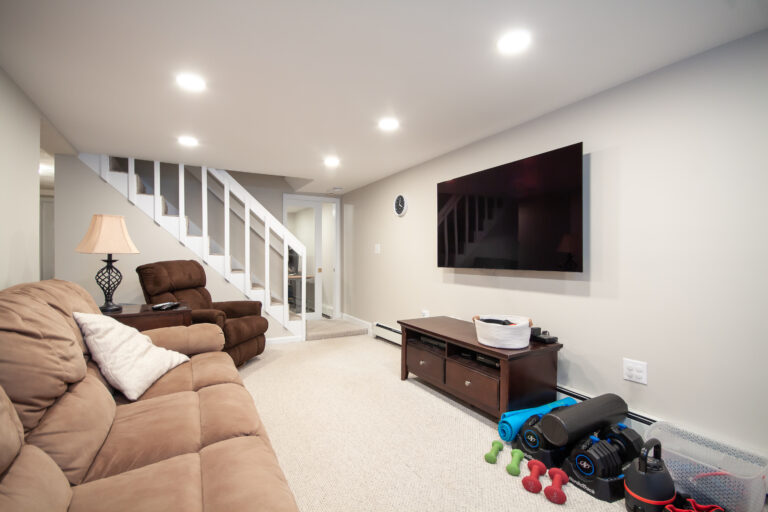
In this WORKS By JD lower-level project, the basement supports real daily life. There is a comfortable living area, space for movement, a mounted television, soft carpeting, recessed lighting, clean trim, and a tucked-away workspace that gives the room added function without taking over the entire space.
Nothing about it feels overly complicated. That is the point.
Good remodeling should make a home feel easier to live in.
The Best Basements Solve Everyday Problems
A basement remodel should start with the homeowner’s routine, not just the room itself.
Before choosing finishes or deciding where furniture will go, it helps to understand what is missing from the rest of the home.
Maybe the main floor feels too busy.
Maybe there is no quiet place to work.
Maybe the family needs a second living area.
Maybe exercise equipment has no real home.
Maybe the house needs more breathing room without changing its footprint.
A well-planned basement can help solve those problems.
It can create separation without isolation. It can give the home more flexibility. It can make daily routines feel less crowded. And when it is designed with care, it can feel connected to the rest of the home instead of like a separate, secondary space.
That connection matters.
A lower level should not feel like the place you go only when you run out of room upstairs. It should feel like part of the home.
Comfort Comes From the Details
Basements can be tricky because they often come with design challenges: lower ceilings, limited natural light, stair transitions, mechanical systems, and awkward corners.
That is why the details matter.
Lighting plays a major role. Recessed lighting helps brighten the room without adding visual clutter or making the ceiling feel heavy. Flooring matters too. Soft carpeting can make a lower level feel warmer, quieter, and more comfortable for everyday use.
Trim, doors, and wall finishes also help the space feel complete. These details may not be the first thing someone notices, but they affect how finished the room feels overall.
In this project, the clean white trim, simple wall color, soft flooring, and defined zones all work together to create a basement that feels calm, practical, and usable.
That is the kind of remodeling decision that supports the way people actually live.
A Home Office Does Not Always Need a Full Room Upstairs
One of the most useful parts of this lower-level space is the tucked-away office area.
For many homeowners, a home office does not need to be large. It needs to be quiet, defined, and separate enough to support focus.
Using part of a basement for a workspace can be a smart solution, especially when the main living areas are already serving multiple roles. Instead of forcing a desk into a bedroom, kitchen corner, or dining area, a lower-level office can create a better boundary between work and home life.
The key is making it feel planned, not improvised.
A workspace should have proper lighting, enough room to function comfortably, and a location that makes sense within the flow of the home. When those decisions are made thoughtfully, even a compact office area can add real value to daily life.
Better Remodeling Is Not Always About More Space
Homeowners often assume the biggest transformation comes from adding on.
Sometimes that is true. A home addition can be the right answer when the existing footprint no longer supports the household.
But sometimes, the smarter first step is improving what already exists.
A basement remodel can help a home feel larger, more functional, and more complete without changing the structure of the house. It can turn underused square footage into a family room, work zone, guest area, fitness space, media room, or flexible lower-level retreat.
The goal is not just to finish the basement.
The goal is to make the home work better.
That is an important distinction.
Thoughtful Planning Makes the Difference
At WORKS By JD, remodeling starts with understanding how the space needs to support the people living in it.
That means looking beyond the surface and asking practical questions.
What is not working now?
What does the home need more of?
How should this space feel?
How will it be used every week, not just occasionally?
What decisions will make the finished result easier to live with over time?
Those questions help guide the design-build process and create a stronger foundation before construction begins.
A basement can become a beautiful finished space, but beauty alone is not enough. It also needs to feel comfortable, durable, useful, and connected to the rest of the home.
That is where planning, craftsmanship, and communication matter.
Make the Space You Already Have Work Better
If your home feels like it needs more room, your basement may be worth a closer look.
The space you need for work, rest, movement, family time, or daily breathing room may already be there. It may simply need a clearer plan, better lighting, more thoughtful finishes, and a design-build team that understands how to turn underused space into part of the home.
A finished basement should not feel like an afterthought.
It should feel like a natural extension of the way you live.
WORKS By JD | Build it better, together.
Visit worksbyjd.com to begin your transformation.