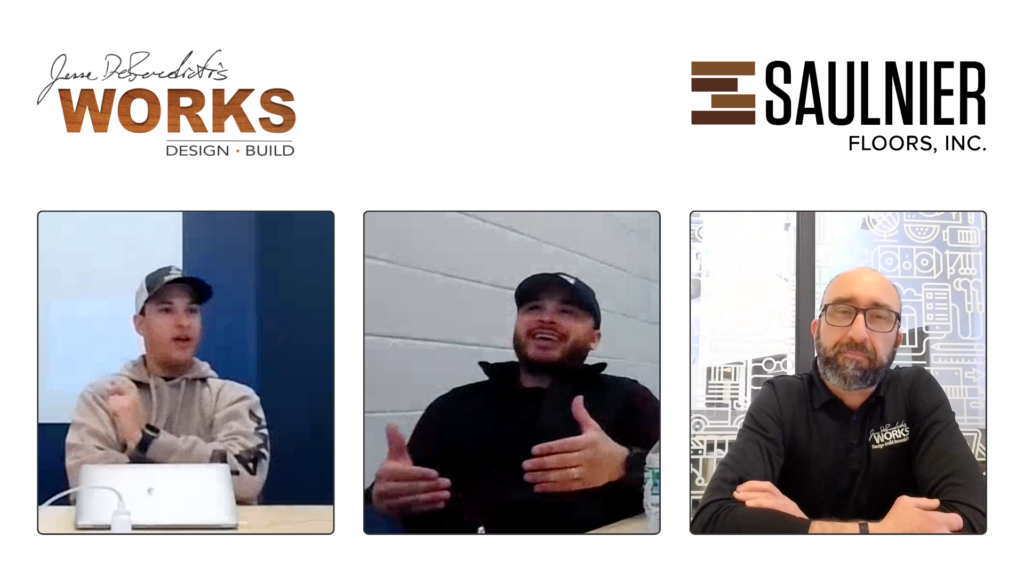
This week’s Monday Power Hour brought the community together in person at Staples in Danvers for a deep, practical conversation with Neil Andrews and Jake from Saulnier Floors.
Rather than focusing on products alone, the discussion centered on process, preparation, and expectations — the real factors that determine whether epoxy flooring succeeds or fails over time. It was an honest, trade-level conversation rooted in experience, lessons learned, and collaboration.
Why Preparation Matters More Than Product
One of the strongest themes throughout the session was simple but often overlooked: epoxy doesn’t fail because of the coating — it fails because of what happens (or doesn’t happen) before installation.
Neil walked through how every concrete slab behaves differently. Moisture levels, cracking, age, and previous use all affect how a floor should be approached. Treating all slabs the same leads to premature failure, no matter how good the product claims to be.
Attendees were reminded that proper prep includes:
-
Moisture testing before system selection
-
Grinding to the correct surface profile for adhesion
-
Addressing cracks, joints, and imperfections individually
-
Matching the system to the space — garage, basement, mechanical room, or commercial use
This level of diagnosis is what separates long-term performance from short-term fixes.
Choosing the Right System for the Space
Another key takeaway was that there is no one-size-fits-all epoxy solution.
From flake systems for garages to sealed concrete or decorative finishes for interior spaces, Neil and Jake emphasized that function should always guide design — not the other way around. Slip resistance, durability, moisture mitigation, and maintenance expectations all need to be considered upfront.
The group also discussed how newer technologies have expanded what’s possible, including:
-
Odorless and low-VOC systems for occupied homes
-
Moisture-tolerant solutions for older basements
-
Decorative options that move beyond the traditional “garage look”
When the right system is paired with the right prep, epoxy becomes a long-term asset rather than a recurring problem.
Setting Clear Expectations Builds Better Outcomes
Beyond materials and methods, the conversation repeatedly came back to communication and expectation-setting.
Cure times, maintenance requirements, and limitations all play a role in how a floor performs — and how satisfied a client feels long after the work is done. Proactively educating clients, partners, and project teams creates better experiences and fewer surprises.
That mindset — treating education as part of the service — resonated strongly with the group and reinforced the value of trade partners who take the time to explain the “why,” not just the “what.”
The Value of In-Person Industry Conversations
This session was a great example of why Monday Power Hour continues to prioritize face-to-face connection at Staples.
The open dialogue, questions from the room, and shared experiences are what turn presentations into real learning moments. These conversations don’t just build knowledge — they build trust, partnerships, and better projects across the industry.
We’re grateful to Neil Andrews and Jake from Saulnier Floors for sharing their expertise and contributing to a meaningful discussion.
If you’d like to learn more about their work or explore their approach to flooring systems and concrete preparation, you can visit their website:
-
Saulnier Floors — https://saulnierfloors.com
You can also connect with Neil and the Saulnier Floors team directly to continue the conversation beyond Monday Power Hour.
If you’re interested in attending a future Monday Power Hour or sharing your own experience as a presenter, we’d love to have you join us.
Build it better, together.