When most homeowners think about glass in a remodel, they usually think about one thing first: the shower door.
That makes sense. Shower glass is one of the most visible and familiar applications in a bathroom remodel. But one of the more interesting takeaways from a recent in-person Staples Power Hour with All State Glass was that specialty glass can do much more than many homeowners expect. The conversation moved well beyond shower enclosures into partitions, railings, wine rooms, mirrors, back-painted glass, privacy treatments, and other custom applications that can shape how a home looks and feels. All State Glass also emphasized an important point for remodelers and homeowners alike: they do not see themselves as only a shower door company, but as a broader specialty glass resource for residential projects.
At WORKS by JD, that kind of conversation matters because it expands what is possible for the homeowner while reinforcing a larger truth about remodeling. Better outcomes often come from knowing what options exist early enough to plan for them well.
Many Homeowners Do Not Know What Glass Can Actually Do
One of the most useful parts of the discussion was simply the reminder that homeowners are not always aware of what is possible.
During the meeting, Jon Shellington walked through examples ranging from all-glass partitions with barn door hardware to insulated glass wine cabinets, back-painted glass, glass railings, custom mirrors, sauna glass, splash panels, and specialty privacy treatments. The conversation repeatedly came back to the same idea: people often do not ask for these things because they do not realize they are realistic options for a home.
That is a meaningful homeowner lesson. Remodeling decisions are often limited not by budget or design intent alone, but by awareness. If no one introduces a possibility, the homeowner cannot weigh whether it would improve the space.
This is one reason strong partnerships matter. A thoughtful remodeling team does more than execute what is already on the plan. It helps bring useful ideas into the conversation before the window for planning them has passed.
Specialty Glass Can Change the Feel of a Home
Glass has a unique ability to make spaces feel lighter, cleaner, and more open without fully dividing or closing them off.
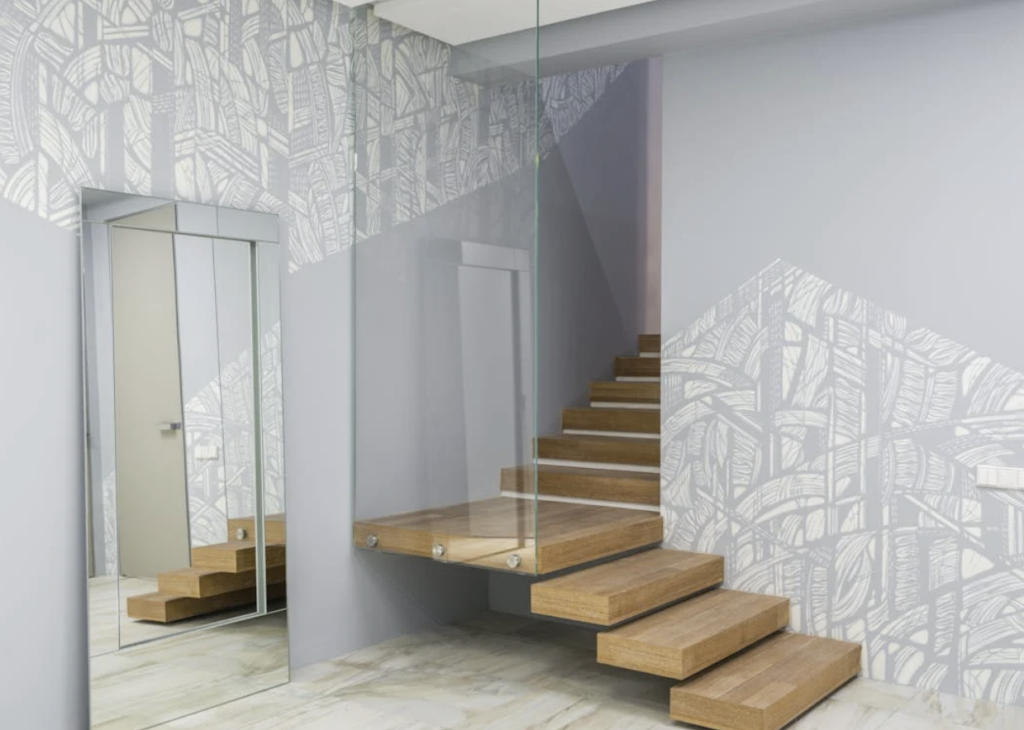
That showed up clearly in the examples from the meeting. Glass partitions can allow light to move deeper into a house while still defining zones. Decorative or privacy glass can create separation in bathrooms without giving up daylight. Wine rooms can become architectural features instead of hidden storage. Railings can support a more contemporary look with fewer visual interruptions. Back-painted glass can create a sleek, low-profile backsplash or wall treatment in places where a homeowner wants something different from tile.
For homeowners, this matters because design is not only about materials in isolation. It is about how a home feels once everything is assembled. The right glass detail can make a room feel more spacious, more finished, and more intentional.
Precision Matters Because Specialty Glass Is Not Forgiving
As the conversation widened into more custom applications, another point became even clearer: specialty glass depends on exact execution.
All State Glass spoke about using laser scanning for more complicated work so pieces can be built accurately and installed correctly the first time, especially on railings and other challenging applications. They also described how accurate measurements, proper planning, and the right technical approach help avoid rework, delays, and frustration for both the project team and the homeowner.
That is especially important in remodeling, where surrounding conditions are rarely perfect. A wall may not be as straight as it looks. A floor may be out of level. A custom mirror can exaggerate imperfections. A railing system has to fit existing conditions precisely. In the meeting, they even discussed how mirror installations can create a “funhouse” effect if walls are not as true as they first appear.
For homeowners, the takeaway is simple. Specialty glass should never be treated as a casual finishing touch. It is one of the categories where behind-the-scenes precision has a major impact on the visible result.
Good Planning Helps Balance Design, Performance, and Budget
Another valuable theme from the discussion was flexibility.
Not every homeowner wants the most expensive version of a specialty-glass feature, and not every application requires it. The meeting touched on this with examples like simulated divided-light systems, where an applied grid can create a strong visual effect at a lower cost than a more expensive steel-framed approach. The conversation also compared standard clear glass with low-iron glass and discussed upgrades like ShowerGuard coating, showing how some choices can meaningfully improve appearance or maintenance without dramatically changing the overall budget.
That kind of guidance is useful because homeowners are often trying to balance aspiration with practicality. They may want a custom feature, but they also want to understand what really drives value, where the tradeoffs are, and which upgrades are actually worth it.
A good process helps make those distinctions clear. It does not just present options. It helps explain which options support the homeowner’s priorities best.
Wine Rooms, Mirrors, and Partitions Show How Broad the Category Really Is
One of the most interesting homeowner angles in this meeting is how broad the glass category becomes once you move beyond the shower.
All State Glass described insulated wine-room glazing, decorative mirror work, gym mirrors, privacy partitions, glass office fronts, sauna applications, and specialty hardware systems that can change the look and use of a room. They also discussed how some homeowners are increasingly interested in feature-driven spaces such as wine rooms and other lower-level amenities where glass becomes part of the design language rather than just a practical enclosure.
For North Shore homeowners, this is especially relevant in higher-end remodeling where details matter. Once a project moves into custom kitchens, refined baths, finished lower levels, home gyms, or entertaining spaces, glass often plays a larger role than homeowners expect.
That does not mean every house needs a dramatic glass feature. It does mean the right project can benefit from thinking beyond the standard applications.
Better Collaboration Expands What the Homeowner Can Consider
At WORKS by JD, conversations like this are useful because they reinforce how much value comes from knowing the right specialists.
The master guidance behind these partner-based posts is clear: homeowner value should stay at the center, and partner visibility should help demonstrate how WORKS by JD vets relationships, thinks through details, and builds a stronger process around the client experience. When a trade partner like All State Glass can speak clearly about technical execution, material options, design flexibility, and specialty applications, it helps WORKS by JD guide homeowners more thoughtfully and earlier in the process. That is exactly the kind of collaboration these conversations are meant to strengthen.
For homeowners, that is the bigger point. A remodel works better when the team knows not only how to build, but also who to bring in when a project calls for something more specialized.
The Best Results Come From Knowing the Possibilities Early
Most homeowners are not expected to walk into a remodeling project already knowing about insulated wine-room glass, laser-scanned railings, low-iron glazing, back-painted glass, privacy frits, or specialty hardware systems.
What they should be able to expect is a team that knows when those options are worth discussing.
That is what makes this kind of partner conversation valuable. It turns specialty knowledge into homeowner benefit. It helps a remodel feel more creative without becoming careless, and more customized without becoming confusing.
For North Shore homeowners, the lesson is straightforward. Glass can do much more in a remodel than close off a shower. When the right people are involved early, it can help shape light, openness, detail, privacy, and overall refinement in ways that many homeowners never knew were available.